
An Ocean of Becoming
An Ocean of Becoming is a retrospective of Kendall Perry’s transportive instrumental works spanning ten years. This concert takes you on a current of sound, transcending time and words, communicating the ineffable. Just as we surrender to the ocean’s waves, An Ocean of Becoming is an invitation to greet the wide expanse of each moment.


An Ocean of Becoming is a retrospective of Kendall Perry’s transportive instrumental works spanning ten years. This concert takes you on a current of sound, transcending time and words, communicating the ineffable. Just as we surrender to the ocean’s waves, An Ocean of Becoming is an invitation to greet the wide expanse of each moment.
After 4 years of gigging around the city on drums and guitar, this is Kendall’s debut NYC show of their original works. An Ocean of Becoming features brand new works and re-imagined pieces from collaborations with Colorado-based dance company Wild Heart Dance (“The Beloved”, “The Vulnerable Cure” & “Last Land Before Sky”). The concert also includes compositions from Kendall’s early projects (“Unravel” & “Destinata”).
Stars in the evolving night sky
Another stunning collaboration with filmmaker Kate Montgomery, featuring the night sky seen from Spruce Cove on the coast of Maine.
Photography by Kate Montgomery
Original Music by Kendall Perry
"Slip Your Mind" excerpt
I’m a moody star
But if you said glow
I’d cut my soul into a million little pieces just to form constellations to light your way home
— Andrea Gibson
"Sunrise", Timelapse Collaboration Pt. Three
A three part collaborative series of timelapse photography captured by Kate Montgomery, in celebration of Earth Day 2020. In times of social distancing, we are getting creative and working together from across the country. All three videos are captured in Spruce Cove, on the coast of Maine, and myself, in the room where I grew up in Longmont, Colorado.
Here is Part Three, Sunrise.
Photography by Kate Montgomery
Original music written and performed by Kendall Perry.
Featuring Beatriz Rola on Violin.
"Sleeping in the Forest"
I thought the earth remembered me,
she took me back so tenderly,
arranging her dark skirts, her pockets
full of lichens and seeds.
I slept as never before, a stone on the river bed,
nothing between me and the white fire of the stars
but my thoughts, and they floated light as moths
among the branches of the perfect trees.
All night I heard the small kingdoms
breathing around me, the insects,
and the birds who do their work in the darkness.
All night I rose and fell, as if in water,
grappling with a luminous doom. By morning
I had vanished at least a dozen times
into something better.
By Mary Oliver
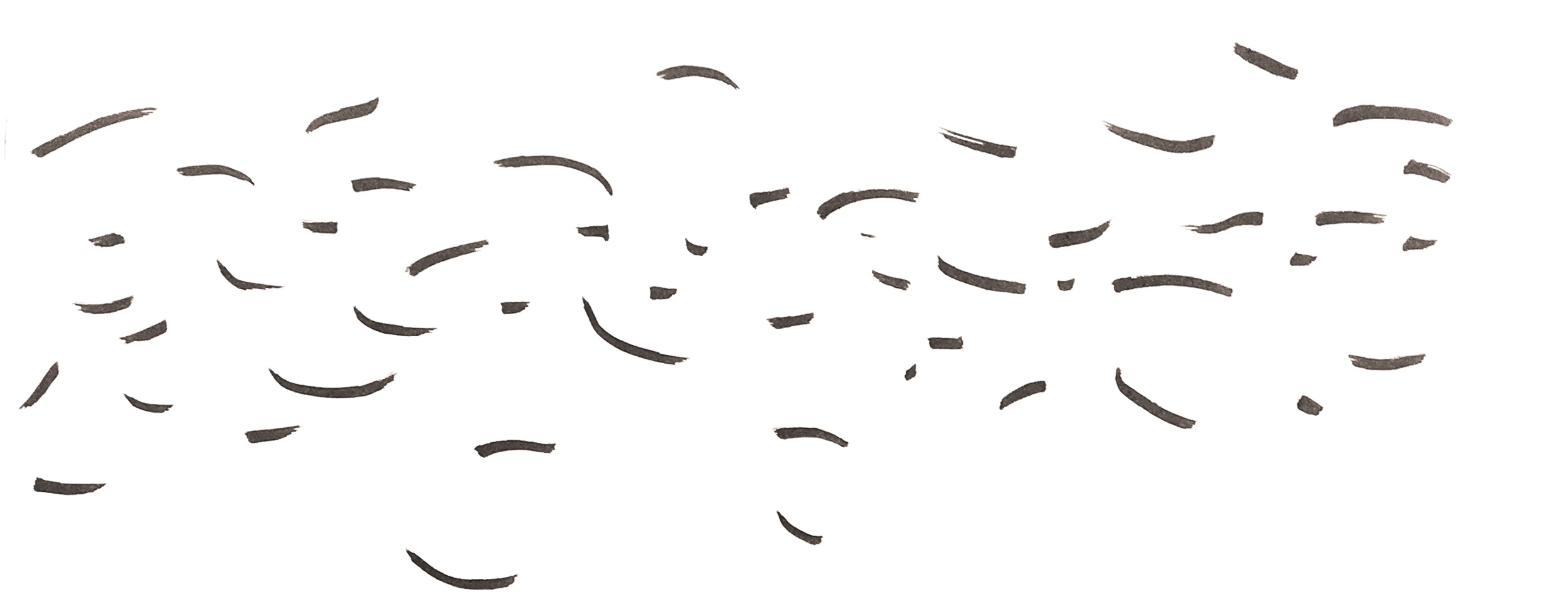
Do Not Be Afraid of Unstable Sounds
I’ve been exploring themes this past year revolving around the concept of the in-between, liminal spaces, thresholds, and live edges. The live edge represents the in-between, a space where we can inhabit. Where edge implies a certain kind of binary, either you are on the edge or you are off, a live edge is a “porous membrane”, a non-binary space we can inhabit, and is a place where we can develop skill.
“Certainties disappear; rhythms buried deep in muscle memory have to undergo a blurring of memory; the note that comes next is no longer fixed” (David Toop, Into the Maelstrom p 16)
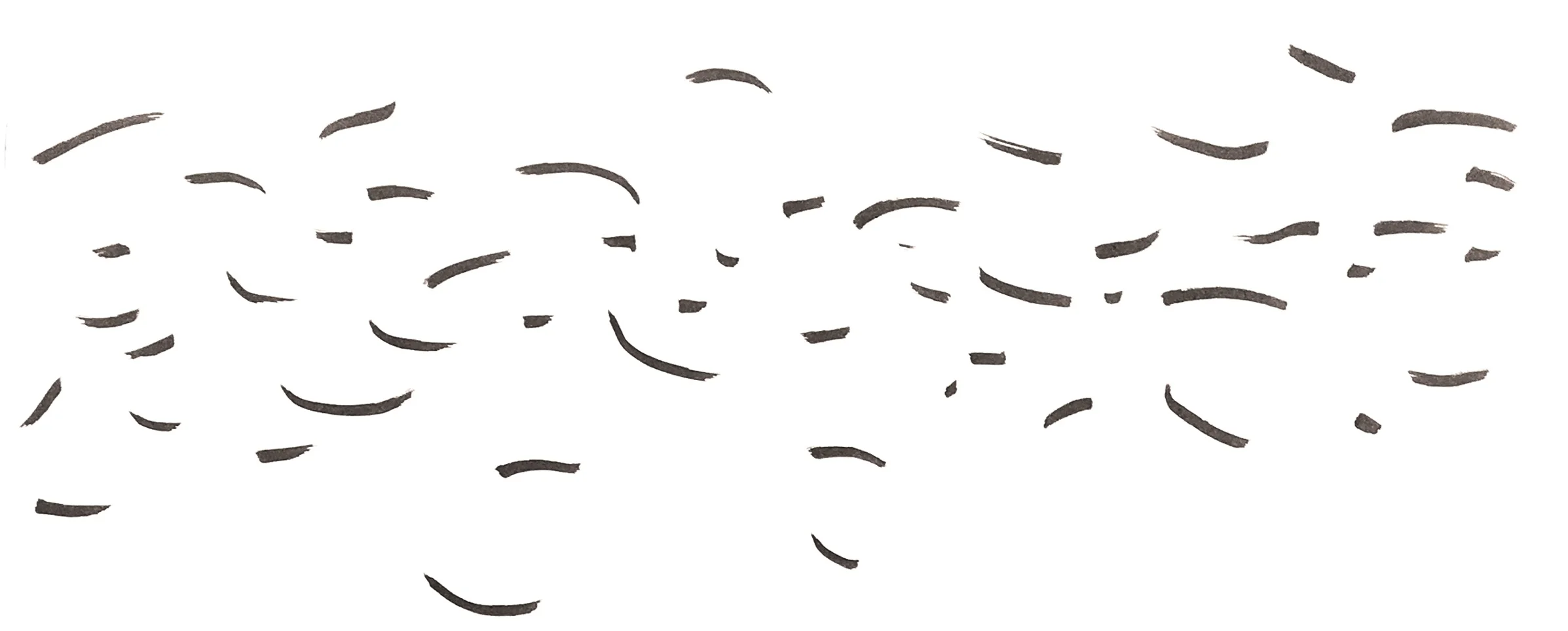
Recently, our Guildhall MMus Leadership team of artists had a residency week at Iklektik in London, March 13th-18th. This was part of the Freedom of Movement Festival curated by Jan Hendrickse and Nell Catchpole, which focused on the medium of sound and it’s “capacity to disrupt, permeate, or circumvent perceived boundaries and norms.”
I’ve been exploring themes this past year revolving around the concept of the in-between, liminal spaces, thresholds, and live edges. The live edge represents the in-between, a space where we can inhabit. Where edge implies a certain kind of binary, either you are on the edge or you are off, a live edge is a “porous membrane”, a non-binary space we can inhabit, and is a place where we can develop skill (Sennett, p 229).
I have been enquiring into how creative resistance can act as a tool and an entry point into a live edge. A tool that doesn’t obstruct performance, but one that “takes hold of that potential obstruction and puts it to use”. To adopt this kind of attitude that resistance can be a cooperation with one’s materials, “a distrust of the self-evident” and a “technique of investigation” (Callis et al). This kind of attitude toward discovery is one that aligns itself with the in-between and a state of palpable potentialities. Practicing creative resistance is also a kind of political response which does not take things as they are, but allows for what is in front of us to speak with us in new ways. Perhaps also in ways we didn’t realize were possible or could have imagined. To emerge with new ways of creating and becoming in sound through various types of relationship.
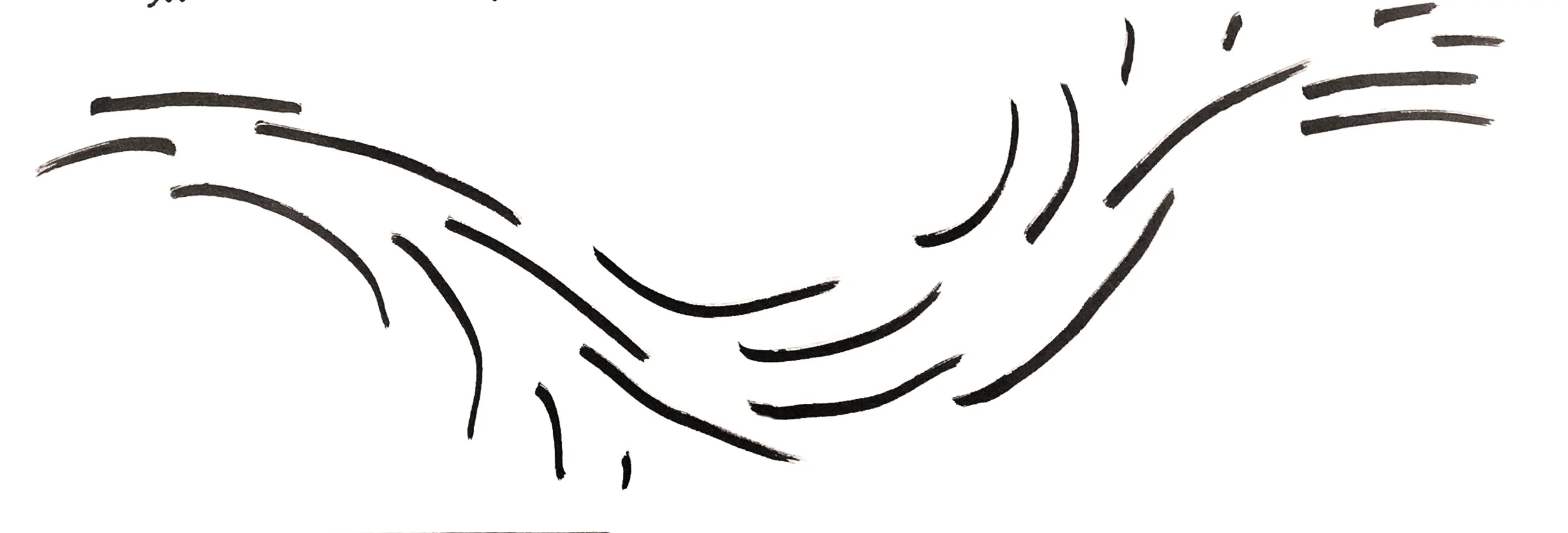
For this residency week, I felt compelled to explore the relationship of composer, performer and indeterminacy in creating a graphic score. In the process of creating, I was very specific about what the graphic score meant to me and the concepts from which it emerged. I thought about live edge and thresholds of control, and the indeterminacy of when my pen would or wouldn’t be making contact with the paper. I thought about how creating accidental ink contact with the paper would result in something very beautiful yet unexpected.

Edges Of graphic/text score, created for Freedom of Movement Festival
I’ve been inspired by the work of John Cage, and his practice of exploring indeterminacy in composition. In a compositional process, when elements of a score are left up to chance or choice, or are not intentionally specified, the nature of the performance is left indeterminate (Cage). This allows the score and the performance to be what it will be.
In creating the score, there were aspects that felt specific (or, determinate), and aspects that I wanted to leave open (indeterminate). For example, I wanted the score to be performed by an instrument which could sustain a note -- such as a bowed instrument or a flute. I wanted to inspire the performer into thinking about the in-between and creative resistance, but without explicitly saying it. I used the language “you may want to consider…” to imply an option but ultimately left it up to the performer’s choice. “Don’t be afraid of unstable sounds” was slightly more pointed toward my enquiry, but still left open to be explored and left the graphic score to speak for itself to each individual performer.
I was more interested in the process the performer would choose to take in the interpretation and exploration with this score. Such as what would emerge out of their relationship with their instrument, and what would inspire them visually about the score to create a sonic performance.
Do you read one line at a time? Does one line imply one ‘note’ or not? Do you repeat a line several times? How literally do you take the suggestion of using pressure?
One example of indeterminacy resonated with me was first hearing Bennett Hogg’s piece Devil's Water 1, where he used the current of a river to “bow” the strings of a violin as the stream passes through the violin’s body. He found himself “chasing a particular sound, even though that sound was not actually there but was being made through the interaction of the river, the violin” and himself (Hogg). This collaboration of materials blurs the role of composer, performer and material. There are certain elements that he could have artistic control over, like the tuning of the strings and the positioning in the river, but how the water would “bow” the strings would ultimately be indeterminate. I would consider this a live edge intra-action of creativity, composing and improvising between the materials, the person and their gestures, the river, the microphones and the violin.
References.
Cage, John. Silence: Lectures and Writings. Wesleyan University Press, 1961.
Callis, Sarah, et al. “Creative Resistance as a Performance Tool.” Music and Practice, vol. 2,
www.musicandpractice.org/volume-2/creative-resistance-as-a-performance-tool/.
Hogg, Bennett. “The Violin, The River, and Me: Artistic Research and Environmental
Epistemology in Balancing String and Devil's Water 1, Two Recent Environmental Sound Art Projects.”
Hz Journal, vol. 18, May 2013, www.hz-journal.org/n18/hogg.html.
Sennett, Richard. The Craftsman. Yale University Press, 2008.
Toop, David. Into the Maelstrom: Music, Improvisation and the Dream of Freedom. Bloomsbury
Publishing Inc, 2016.